





Originally posted by shavixmirIt did not "turn into" Randian individualism, it was replaced by Randian individualism.
Very interesting.
How did this "social contract" idea, if I understand correctly; mankind functions best within society, turn into this Randian individualism?
For that, I am sure, is one of the problems within society today.
In the United States, a significant part of this process was the results of decades of commitment to grass-roots organizing. Rick Perlstein's Before the Storm: Barry Goldwater and the Unmaking of the American Consensus does a terrific job of tracing this organizing from the 1950s up through the 1960s, but always with an eye to how this work produced the political infrastructure that would succeed in the 1980 election, and that has held sway over American politics since.
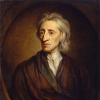
Originally posted by lucifershammerLocke took for granted that the Christian God existed. He explained Man's nature to be in conformity with the Divine Will. However, this is not a necessary component of Natural Law/Fundamental Rights theory. Paine rejected Christianity in toto in his Age of Reason; the Declaration of Independence refers to "Nature and nature's God" an odd way to term a belief in a Christian God. Many of the Framers were Deists who believed that there was a Creator who set the Universe in motion by setting forth the physical laws and rules, but who then had no further part in the doings of the universe (like a Watchmaker with a watch).
Didn't Locke argue for the existence of Natural Rights on the basis of Man being a created Being?
Whether one believes Man's Nature is this way because God made it that way or because that's how it turned out or some other philosophical permutation is really not important to modern Natural Law/Fundamental Rights Theory.


Originally posted by WulebgrI've traced American anti-communism back to the 30's. Basically after Stalin sided with Hitler, communism became "Organa-non grata" in the States.
It did not "turn into" Randian individualism, it was replaced by Randian individualism.
In the United States, a significant part of this process was the results of decades of commitment to grass-roots organizing. Rick Perlstein's Before the Storm: Barry Goldwater and the Unmaking of the American Consensus does a terrific job of tracing this orga ...[text shortened]... re that would succeed in the 1980 election, and that has held sway over American politics since.
But if I interpret No1 correctly, then there is great deal of communism (society as the basis) in the original set-up of the US.
To be more specific, the right to property (read: land, water, etc.) which undermines the basic principle of society and equal rights for all (for there is only an X amount of land and an Y amound of water, so not everyone can own it); where did this come from? And when?
2 edits
Originally posted by sasquatch672This might help:
Can you provide some more insight into the religious backgrounds of the Framers? I ask only because a) too busy today to look for myself and b) alot of the Holy Rollers screwing up our country carry on about how "The Founding Fathers based our country upon Christian principles"...blah blah blah...I recall reading somewhere that Benjamin Franklin regarded religion as an enemy of good government and civil society.
http://www.theology.edu/journal/volume2/ushistor.htm
Many well-meaning Christians argue that the United States was founded by Christian men on Christian principles. Although well-intentioned, such sentiment is unfounded. The men who lead the United States in its revolution against England, who wrote the Declaration of Independence and put together the Constitution were not Christians by any stretch of the imagination.
EDIT: Then again:
http://en.wikipedia.org/wiki/Founding_Fathers_of_the_United_States#Longevity_and_family_life
In terms of religious affiliation, the men mirrored the overwhelmingly Protestant character of American religious life at the time and were members of various denominations. Only two, Carroll and Fitzsimons, were Roman Catholics. A few were not particularly religious. Some were even appalled at organized religion [LH: link provided earlier in this post follows]
Originally posted by lucifershammerI regard that site as hysterical and simple-minded. The religious backgrounds of the Framers were varied with Puritans like Sherman from Connecticut making substantial contributions to the DOI and the Constitution. The Framers declared in one of there first treaties that with the nation of Tripoli that the US was in "no way founded on the Christian religion" but that is more of a statement affirming the seperation of Church and State than a statement of non-belief. I don't know how to exactly quantify it, but my sense is that a substantial majority of the Framers would have defined themselves as Christians, even if their ideas do not conform to what the cults of "Born Again Christians" that seem to dominate the web regard as "Christian".
This might help:
http://www.theology.edu/journal/volume2/ushistor.htmMany well-meaning Christians argue that the United States was founded by Christian men on Christian principles. Although well-intentioned, such sentiment is unfounded. The men who lead the United States in its revolution against England, who wrote the Declaration of Ind ...[text shortened]... and put together the Constitution were not Christians by any stretch of the imagination.

Originally posted by no1marauderRight! I mean, one was even Roman Catholic (Carroll, that good
...my sense is that a substantial majority of the Framers would have defined themselves as Christians, even if their ideas do not conform to what the cults of "Born Again Christians" that seem to dominate the web regard as "Christian".
Irishman!). By RBHILL's standards, he's an idol worshipping heretic!
Hurray for America, land of the heathen!
😛
Nemesio